

Every child’s Taekwondo journey begins with a first step. For some, it starts with learning a basic stance or practising their first kick. Over time, regular training, dedication and consistent effort help them develop the skills and confidence to progress through different belt levels.
For parents looking for Taekwondo classes for kids in Abu Dhabi, understanding the belt progression can help them appreciate how children learn and grow through martial arts.
The Taekwondo belt system is more than a way to recognise a student’s skill level. It represents discipline, patience, commitment and personal development. Let’s explore how children progress from beginner to black belt and what they can learn at every stage.
1. Understanding the Taekwondo Belt System
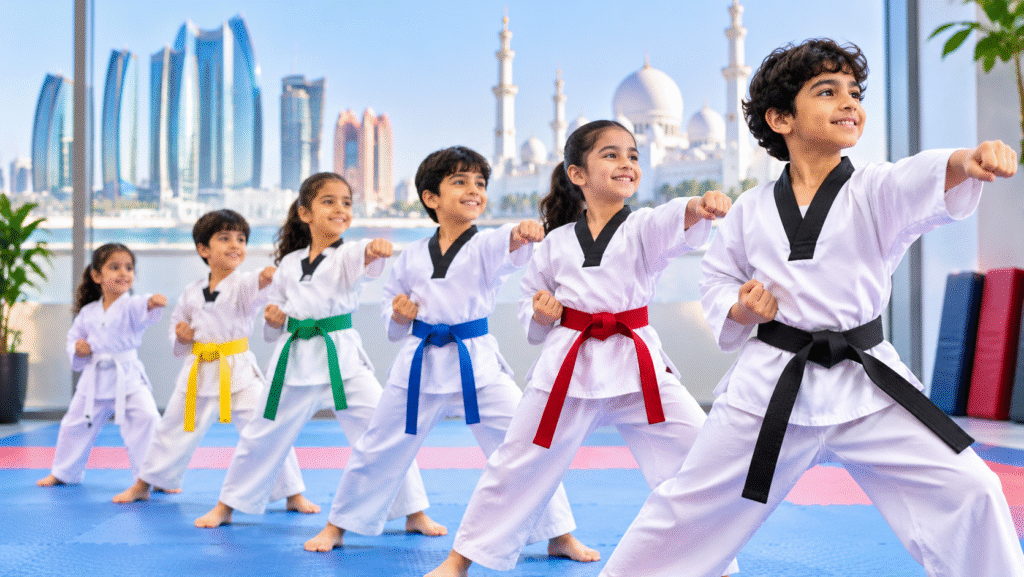
Taekwondo uses a coloured belt system to recognise a student’s progress, knowledge and technical development. Beginners usually start with a white belt and gradually work towards higher belt levels as they gain experience.
Each belt represents a stage in the learning journey. Students develop fundamental techniques before moving on to more advanced movements, patterns, sparring skills and other aspects of Taekwondo.
The exact belt colours, order and grading requirements may vary depending on the Taekwondo organisation and the club’s curriculum.
2. White Belt: The Beginning of the Journey
The white belt marks the beginning of a child’s Taekwondo training. At this stage, children are introduced to the basic principles of martial arts.
They begin learning:
- Basic Taekwondo stances and movements.
- Simple punches and kicks.
- Proper posture and balance.
- Basic commands and training etiquette.
- Respect for instructors and fellow students.
The primary goal is to help beginners become comfortable with the training environment while developing interest and confidence.
3. Coloured Belts: Building Skills and Discipline
As children gain experience, they progress through different coloured belts. Every grading stage introduces new challenges and opportunities to improve.
Depending on the club’s belt system, students may work towards yellow, green, blue, red and other intermediate belt levels.
During these stages, children gradually develop:
- Better coordination and flexibility.
- Improved balance and body control.
- More accurate kicking and punching techniques.
- Stronger concentration and listening skills.
- Greater confidence in performing movements.
Students may also learn Taekwondo patterns, known as poomsae, and practise controlled sparring when they are ready.
Progression is not simply about learning more techniques. It also involves developing consistency, respect and a positive attitude towards training.
4. Red Belt: Preparing for Advanced Training
The red belt is an important stage in many Taekwondo grading systems. It indicates that a student has developed a stronger foundation and is preparing for more advanced techniques.
At this level, children may focus on:
- Improving the accuracy and speed of techniques.
- Developing stronger kicking combinations.
- Practising advanced patterns.
- Improving stamina and coordination.
- Demonstrating discipline during training.
Students are encouraged to remain patient and focused as they prepare for the next stage of their martial arts journey.
5. Black Belt: A Milestone, Not the Finish Line
For many young Taekwondo students, earning a black belt is a major achievement. It represents years of learning, practice, commitment and perseverance.
However, a black belt does not mean that learning is complete. It marks the beginning of a more advanced stage of Taekwondo training.
Students may continue developing their technical skills, leadership abilities, knowledge and understanding of martial arts.
It is important for children to understand that the journey matters just as much as the achievement.
6. How Taekwondo Belt Progression Benefits Children
The belt system provides children with clear learning goals and helps them recognise their progress over time.
Here are some important benefits:
Builds discipline: Regular training teaches children to follow instructions, respect rules and maintain consistency.
Improves confidence: Achieving new belt levels gives children a sense of accomplishment and encourages them to take on new challenges.
Develops patience: Students learn that improvement takes time, practice and dedication.
Encourages physical fitness: Taekwondo training helps develop strength, flexibility, balance, coordination and stamina.
Promotes goal-setting: Working towards the next belt teaches children how to set goals and work steadily towards achieving them.
These benefits can support children’s overall development both inside and outside the training hall.
7. How Does Taekwondo Belt Grading Work?
Taekwondo grading is an assessment that allows instructors to evaluate whether a student is ready to progress to the next belt level.
Depending on the organisation and club curriculum, grading may assess:
- Basic techniques and combinations.
- Kicking and punching accuracy.
- Taekwondo patterns.
- Balance and coordination.
- Knowledge of commands and etiquette.
- Sparring or self-defence skills, where applicable.
Students are generally expected to demonstrate the required skills and understanding for their current level.
Parents should remember that every child progresses at a different pace. Consistent participation and improvement are more important than rushing towards the next belt.
8. How Parents Can Support Their Child’s Taekwondo Journey
Parents play an important role in encouraging children throughout their martial arts training.
Here are a few simple ways to support their progress:
- Encourage regular attendance at training sessions.
- Appreciate effort and improvement, not just belt achievements.
- Help children practise basic movements when appropriate.
- Celebrate grading milestones and personal achievements.
- Encourage patience when learning challenging techniques.
- Maintain communication with instructors about progress.
Positive encouragement helps children stay motivated and enjoy their Taekwondo experience.
9. Start Your Child’s Taekwondo Journey at Valiant Taekwondo Club in Abu Dhabi
Choosing the right training environment is an important part of a child’s martial arts journey. A supportive and structured learning environment can help young students develop their skills at a comfortable pace.
At Valiant Taekwondo Club in Abu Dhabi, children can explore Taekwondo training while working towards improved physical fitness, discipline, confidence and technical development.
Whether your child is a complete beginner or already has some martial arts experience, taking the first step can open the door to an exciting learning journey.
Give your child the opportunity to learn, grow and achieve new milestones through Taekwondo.
Frequently Asked Questions (FAQs)
1. At what age can children start learning Taekwondo in Abu Dhabi?
The suitable starting age depends on the child’s development and the training club’s admission policy. Parents should check with the academy about age requirements and beginner programmes.
2. What is the first belt in Taekwondo?
White belt is commonly the starting belt in Taekwondo. It represents a beginner who is starting to learn the basic techniques and principles of martial arts.
3. How many belts are there in Taekwondo?
The number and sequence of belts vary between Taekwondo organisations and grading systems. Common colours include white, yellow, green, blue, red and black, although intermediate grades may differ.
4. How long does it take for a child to earn a black belt?
There is no fixed timeline. It depends on the child’s age, training frequency, skill development, grading requirements and the organisation’s rules. Achieving a black belt generally requires consistent training over several years.
5. What happens during a Taekwondo belt grading test?
A grading test may assess basic techniques, kicks, punches, patterns, balance, discipline and other skills required for the student’s level. Requirements vary depending on the grading system.
6. Does Taekwondo help children develop confidence and discipline?
Yes. Structured Taekwondo training can encourage children to follow instructions, practise consistently, set goals and develop confidence through gradual skill improvement.
7. Can beginners join Taekwondo classes for kids in Abu Dhabi?
Yes. Beginner programmes introduce children to basic movements, techniques and training etiquette before progressing to more advanced skills. Contact the club to confirm its current admission options.
8. Where can I enrol my child in Taekwondo classes in Abu Dhabi?
Parents can contact Valiant Taekwondo Club to enquire about children’s Taekwondo training, available class schedules and admission opportunities.
Looking for Taekwondo classes for kids in Abu Dhabi? Contact Valiant Taekwondo Club today and enquire about kids’ admissions and trial classes!