
f you have never attended a Taekwondo class before, you may wonder what actually happens during a typical training session. Is it mostly kicking and punching? Is it physically demanding? Do beginners train differently from experienced students?
A typical Taekwondo training session combines warm-ups, fitness exercises, technique practice, kicking drills, self-defense movements, sparring, and cool-down activities. The exact structure can vary depending on the student’s age, experience, and training goals, but every session is designed to develop physical fitness, discipline, confidence, coordination, and martial arts skills.
For students looking for Taekwondo classes in Abu Dhabi, understanding what happens during a session can make the first class feel much more comfortable.
1. Warm-Up and Stretching
Every Taekwondo session usually begins with a warm-up. This prepares the body for physical activity and helps students move safely.
Warm-up activities may include:
- Light jogging
- Jumping exercises
- Dynamic stretches
- Arm and shoulder movements
- Leg swings
- Mobility exercises
- Basic coordination drills
The warm-up gradually increases the heart rate and prepares the muscles and joints for kicking, footwork, and other movements.
For children, warm-ups can also include fun movement-based games that improve balance, coordination, and agility.
2. Basic Taekwondo Stances and Footwork
After warming up, students may practice fundamental stances and footwork.
Good footwork is an important part of Taekwondo because it helps students maintain balance, move efficiently, and control their distance from an opponent.
Beginners may learn basic movements such as:
- Fighting stance
- Forward and backward movement
- Side stepping
- Turning
- Maintaining balance
- Changing direction
Although these movements may seem simple, mastering the basics creates a strong foundation for advanced techniques.
3. Learning Taekwondo Techniques
The instructor then introduces or reviews specific Taekwondo techniques.
Depending on the student’s level, this could include:
- Front kicks
- Roundhouse kicks
- Side kicks
- Back kicks
- Punches
- Blocks
- Defensive movements
- Combination techniques
The instructor usually demonstrates the movement first. Students then practice the technique repeatedly while receiving corrections on posture, balance, hand position, speed, and accuracy.
Repetition is an important part of martial arts training. Practicing a movement consistently helps students develop better coordination and technique.
4. Kicking and Pad Drills
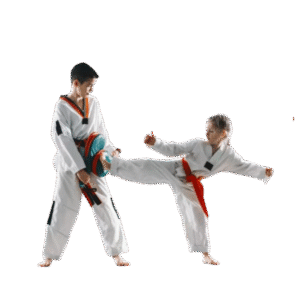
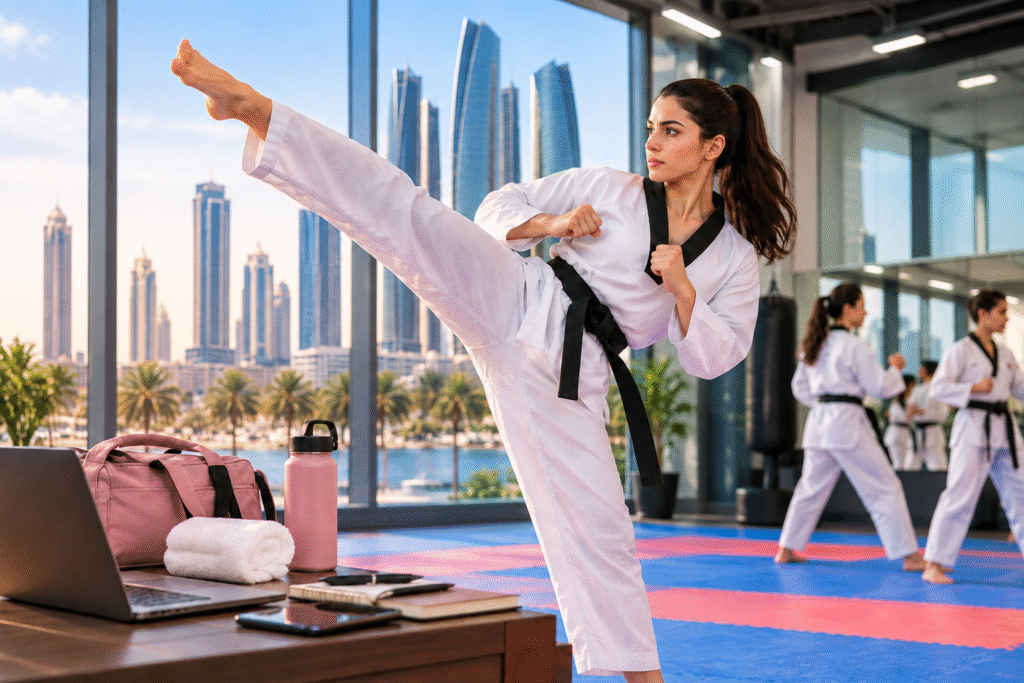
One of the most recognizable parts of Taekwondo training is kicking practice.
Students may work with kicking pads or targets held by an instructor or training partner. These drills allow students to practice techniques with greater focus on speed, accuracy, control, and timing.
For example, a beginner may start with a basic front kick before progressing to combinations such as:
Front Kick → Roundhouse Kick → Footwork
As students improve, drills can become faster and more complex.
Pad training can also make classes highly engaging, particularly for children and teenagers.
5. Fitness and Conditioning
Taekwondo isn’t only about martial arts techniques. Physical conditioning is also an important part of training.
A session may include exercises such as:
- Squats
- Lunges
- Push-ups
- Planks
- Sit-ups
- Burpees
- Jumping exercises
- Agility drills
These exercises help develop strength, endurance, flexibility, balance, and overall fitness.
Regular Taekwondo training can therefore become part of an active lifestyle while helping students develop physical confidence.
6. Poomsae or Forms Practice
Students who are progressing through the Taekwondo curriculum may spend part of their class practicing Poomsae, also known as forms.
Poomsae consists of a sequence of movements performed in a specific order. It combines techniques such as blocks, punches, stances, and kicks.
Practicing forms helps students develop:
- Technique
- Concentration
- Memory
- Balance
- Coordination
- Discipline
- Body control
Students gradually learn more complex forms as they advance through their belt levels.
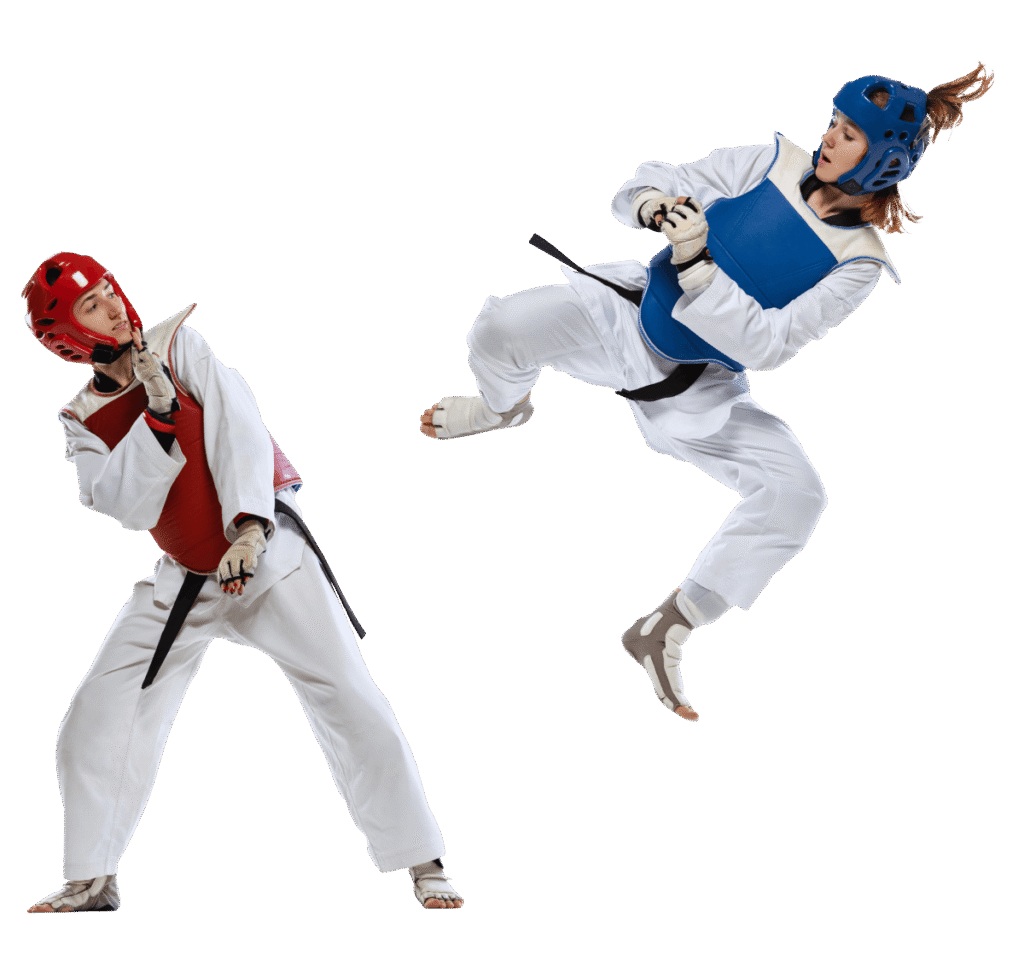
7. Sparring Practice
Depending on the student’s age, level, and class structure, sparring may also be included.
Sparring gives students an opportunity to apply techniques in a controlled training environment. Students learn how to move, defend, react, maintain distance, and apply appropriate techniques while following safety rules.
Protective equipment may be used during sparring, and instructors supervise the activity carefully.
For beginners, sparring may be introduced gradually. Students first develop the necessary techniques, movement, control, and confidence before participating in more advanced drills.
8. Self-Defense Training
Some Taekwondo sessions may include practical self-defense exercises.
Students can learn how to respond to different situations using movement, positioning, blocks, escapes, and controlled techniques.
Self-defense training is not simply about physical strength. Students also learn awareness, discipline, confidence, and the importance of avoiding unnecessary confrontation.
9. Instructor Feedback and Corrections
Throughout the session, instructors observe students and provide feedback.
A student might be corrected on:
- Foot positioning
- Balance
- Kicking technique
- Hand position
- Stance
- Breathing
- Timing
- Body posture
These small corrections can make a significant difference over time.
A good Taekwondo class focuses not only on completing an exercise but also on helping students perform movements correctly and safely.
10. Cool-Down and Stretching
At the end of the session, students usually perform cool-down exercises and stretches.
This gives the body an opportunity to gradually return to a resting state after physical activity.
Cool-down activities may include:
- Light movement
- Static stretching
- Breathing exercises
- Flexibility exercises
The instructor may also review what students learned during the session and explain what they should practice before the next class.
How Long Is a Typical Taekwondo Training Session?
The duration of a Taekwondo class depends on the academy, age group, and training level.
A typical session may last around 45 to 90 minutes.
For younger children, sessions may be shorter and include more games and activities. Older students and advanced practitioners may have longer sessions with more intensive technical training and conditioning.
What Should You Bring to Taekwondo Class?
If you’re attending your first class, you generally don’t need complicated equipment.
Depending on the academy, you may need:
- Comfortable sportswear
- Water bottle
- Taekwondo uniform (Dobok) when required
- Protective equipment for sparring
- Towel
Students should arrive a little early so they have enough time to prepare for the session.
What Can Beginners Expect During Their First Class?
Your first Taekwondo class may feel challenging, but you don’t need to be highly fit or experienced before you start.
Beginners are normally introduced to fundamental movements at a suitable pace. The instructor can guide you through the techniques and gradually increase the difficulty as your skills improve.
You may experience some tiredness after your first few sessions, especially if you’re not accustomed to regular exercise. With consistent training, however, your fitness, coordination, flexibility, and confidence can improve.
Benefits of Regular Taekwondo Training
Consistent Taekwondo training can support both physical and personal development.
Physical Benefits
Regular training can help improve:
- Strength
- Flexibility
- Balance
- Coordination
- Cardiovascular fitness
- Agility
- Body control
Mental and Personal Benefits
Taekwondo can also encourage:
- Discipline
- Concentration
- Patience
- Confidence
- Goal-setting
- Perseverance
- Respect
For children, these lessons can extend beyond the training hall and support positive habits at school and at home.
Start Your Taekwondo Journey in Abu Dhabi
A typical Taekwondo session is much more than simply learning how to kick and punch. It combines fitness, technique, discipline, coordination, confidence, and continuous improvement in a structured training environment.
Whether you’re looking for a new fitness activity, want your child to develop discipline and confidence, or are interested in learning martial arts, Taekwondo can be a rewarding activity for different ages and experience levels.
Ready to take your first step? Explore Taekwondo training at Valiant Taekwondo Club in Abu Dhabi and discover how martial arts can become part of your fitness and personal development journey.
Frequently Asked Questions
Is Taekwondo suitable for beginners?
Yes. Beginners can start Taekwondo without previous martial arts experience. Training is normally adjusted according to age, ability, and experience.
How often should I attend Taekwondo classes?
Consistency is more important than intensity. Attending classes regularly allows students to develop techniques and fitness gradually.
Do I need to be physically fit before starting Taekwondo?
No. You can develop your fitness through training. Beginners can start at their own level and gradually improve their strength, flexibility, and endurance.
Is Taekwondo suitable for children?
Yes. Children’s Taekwondo programs can combine martial arts techniques with age-appropriate fitness, coordination, discipline, and confidence-building activities.
What happens during an advanced Taekwondo session?
Advanced sessions may include more complex kicking combinations, Poomsae, sparring, conditioning, reaction drills, and competition-focused training.
Add a clear class flow overviewReduce repetition across sections